

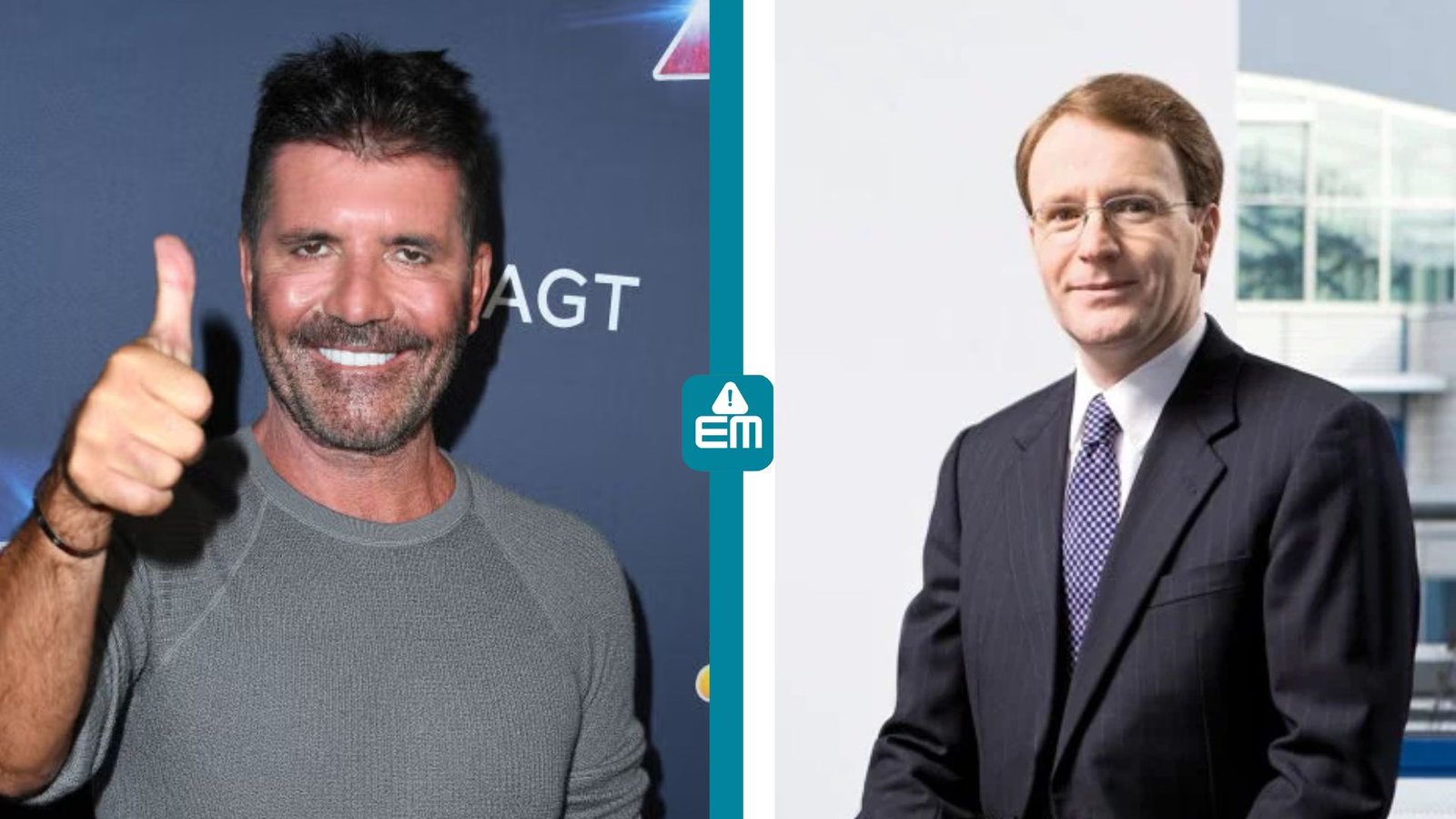

One built his career in healthcare and consumer goods. The other worked in the music industry before becoming a familiar face on television. Put Ulf Mark Schneider and Simon Cowell together in a search, and the obvious question is whether there is a story linking them.
The reliable sources reviewed for this article do not establish a family relationship, business partnership, or shared project between them. Schneider is the former chief executive of Fresenius and Nestlé; Cowell is the entertainment executive behind The X Factor and Got Talent. Their documented careers offer a more useful explanation than speculation about a hidden connection: who each man is, what he actually controlled, and how those roles have changed.
Ulf Mark Schneider is the executive usually called Mark Schneider
The name itself is a useful starting point. Nestlé used “Ulf Mark Schneider” when announcing his appointment in June 2016, while its executive biography uses “Mark Schneider.” These references identify the same German-American business leader. Someone searching the longer name can therefore miss relevant reporting published under the shorter version.
Schneider’s professional background centers on finance and corporate management. He earned a degree in finance and accounting and a doctorate at the University of St. Gallen, followed by an MBA at Harvard Business School. After working at Haniel Group, he became chief financial officer of Fresenius Medical Care in 2001 and chief executive of Fresenius Group in 2003. He held the latter position until 2016.
That healthcare experience helps explain his move to Nestlé. In its appointment announcement, Nestlé emphasized its ambitions in nutrition, health, and wellness. Fresenius operated in areas including dialysis, hospitals, and outpatient treatment, making Schneider’s background relevant to the direction Nestlé described.
There is also a small but important timing distinction. Schneider joined Nestlé on September 1, 2016, for an introductory period. His appointment as CEO began on January 1, 2017. Joining the company and taking over its leadership were separate events.
His Nestlé title belongs to a completed chapter
Calling Schneider “Nestlé CEO” without a date is now misleading. On August 22, 2024, Nestlé announced that he would leave his positions as chief executive and board member. The change took effect on September 1, 2024, when Laurent Freixe succeeded him.
In its departure announcement, Nestlé highlighted Schneider’s work reshaping the company’s portfolio, particularly its focus on coffee, pet care, and nutritional health products. That description gives a concrete sense of his responsibilities: deciding where a large consumer business should concentrate its resources and growth efforts.
His subsequent career includes corporate oversight. Siemens shareholders elected him to the company’s supervisory board on February 13, 2025, for a four-year term. Siemens described him at the time as a potential successor to supervisory board chairman Jim Hagemann Snabe.
As of November 16, 2026, Siemens’ published board roster lists Schneider as a supervisory board member and Snabe as chairman. The distinction matters: being identified as a potential successor does not mean the appointment has already happened.
Read this : Tiger Woods and Jon Nudi: Their Wheaties Link Explained
Simon Cowell’s business career extends beyond the judging desk
Cowell’s television persona can overshadow the work that preceded it. According to the Hollywood Chamber of Commerce’s biography, his first music-industry job was in the mailroom at EMI Music Publishing. He later worked in artists and repertoire, the part of the record business concerned with finding and developing performers.
His television breakthrough followed that industry experience. Cowell appeared as a judge on Pop Idol before becoming known to American viewers through American Idol in 2002. The blunt assessments were highly visible, but they represented only one part of his professional activity.
The crucial distinction is between appearing on a program and creating the format behind it. Sony Music’s corporate records identify Cowell as the creator of The X Factor, launched in 2004, and Got Talent, launched in 2006. His involvement therefore included the entertainment business behind the screen, alongside his appearances in front of the camera.
That background makes “television judge” an incomplete description. It explains his public recognition, but leaves out the production and ownership decisions that shaped his career.
The ownership detail that makes the comparison clearer
A documented transaction provides the clearest example. On July 15, 2020, Sony Music announced an agreement for Cowell to acquire its stake in their television talent and production joint venture.
Under the announced arrangement, the television formats would move into an independently owned Syco Entertainment under Cowell’s sole ownership. Sony would retain the music assets, including the artist roster and back catalog. The television business and the music business were therefore treated differently in the deal.
This is a useful distinction when reading profiles of either man. Schneider’s Nestlé position was an executive appointment to lead an established corporation. Cowell’s agreement concerned personal ownership of an entertainment business. Both involve business decisions, but the titles describe different kinds of authority.
The comparison is about their documented roles. It does not establish that they shared a strategy, leadership style, or professional network. Broad labels such as “business mogul” tend to obscure precisely the details that make each career understandable.
Cowell’s later work brings the business process on screen
A more recent example of Cowell’s work is Netflix’s Simon Cowell: The Next Act, a six-episode documentary series released on December 10, 2025. It follows his search for a new boy band, showing auditions and the process of developing a group. Netflix’s coverage identifies collaborators including songwriter and producer Savan Kotecha, singer-songwriter Kamille, and vocal coach Robert “RAab” Stevenson.
For viewers familiar mainly with the judging desk, the project offers another way to understand his role: selecting performers is one stage in a larger production process involving coaching, recording, and commercial decisions.
That is the practical takeaway from examining these names carefully. A familiar face or famous company supplies only the headline. Dates, appointment records, and ownership agreements explain what someone actually did—and provide a firmer basis for understanding a career than a pairing of names in a search.
Read this : Chris Hemsworth and Glenn Close: Beyond the MCU