


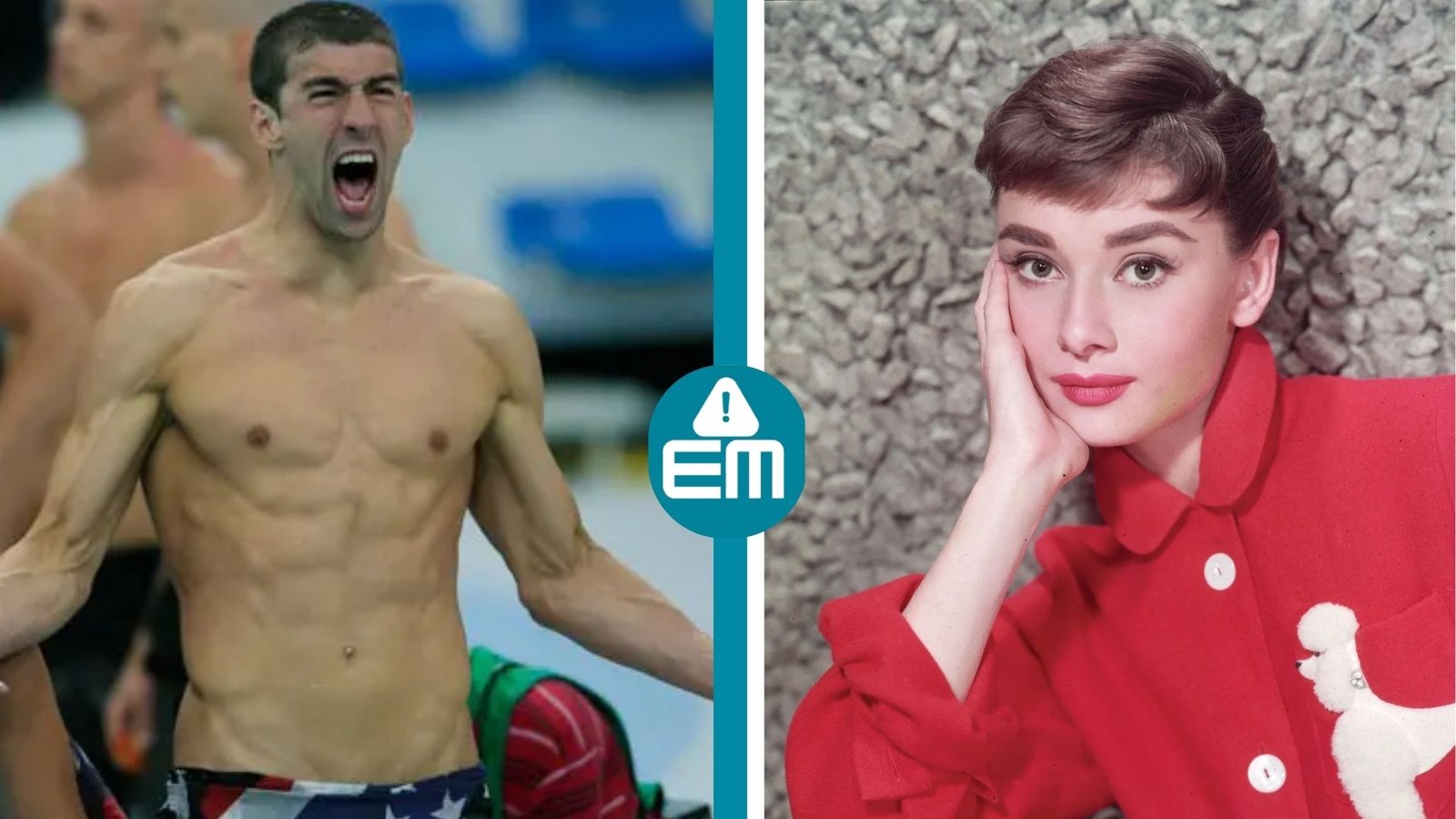

Michael Phelps and Audrey Hepburn are internationally recognized figures, but reliable biographical records do not establish a personal, family, romantic, or professional relationship between them. Phelps became famous as a record-breaking American Olympic swimmer, while Hepburn became one of the defining actresses of classic cinema and later devoted significant time to humanitarian work with UNICEF.
Their lives did overlap briefly: Phelps was born in 1985, while Hepburn died in 1993. However, a chronological overlap is not evidence that the two met or knew one another. Their meaningful connection is better understood as a comparison between two public figures who achieved extraordinary recognition in completely different fields.
Michael Phelps and Audrey Hepburn at a Glance
| Detail | Michael Phelps | Audrey Hepburn |
|---|---|---|
| Known For | Competitive swimming | Film and humanitarian work |
| Born | June 30, 1985 | May 4, 1929 |
| Main Field | Olympic swimming | Acting |
| Major Achievement | 28 Olympic medals | Academy Award for Roman Holiday |
| Olympic Gold Medals | 23 | Not applicable |
| Humanitarian/Charitable Work | Michael Phelps Foundation | UNICEF Goodwill Ambassador |
| Career Era | 2000s–2010s competitive swimming | Primarily 1950s–1960s cinema |
| Documented Relationship | No established connection | No established connection |
The comparison is useful because both became recognizable far beyond the fields that originally made them famous. Their careers also demonstrate two very different forms of lasting public influence.
Who Is Michael Phelps?
Michael Phelps is an American former competitive swimmer whose Olympic record made him one of the most successful athletes in modern sports history.
Born on June 30, 1985, Phelps began swimming as a child. His progress was unusually rapid. At only 15, he represented the United States at the 2000 Sydney Olympic Games, where he finished fifth in the 200-meter butterfly.
That appearance was only the beginning.
Across five Olympic Games—Sydney 2000, Athens 2004, Beijing 2008, London 2012 and Rio 2016—Phelps accumulated 28 Olympic medals.
Twenty-three were gold.
Official records from Team USA and World Aquatics list his Olympic total as 23 gold medals, three silver medals and two bronze medals.
The 2008 Beijing Olympics Changed Phelps’ Career
The defining competition of Phelps’ Olympic career came in Beijing in 2008.
He entered eight events and won gold in all eight.
The achievement established a record for the most gold medals won by an athlete at a single Olympic Games. Team USA records also show that Phelps set seven world records during the Beijing Games.
The performance was significant beyond the medal count. Competitive swimming usually receives its greatest global attention during major international championships. Phelps helped turn individual swimming races into headline sporting events watched by audiences far beyond traditional swimming fans.
He later returned for the 2012 London Olympics and, after initially stepping away from competition, competed again at Rio in 2016.
He finished his Olympic career with six medals in Rio: five gold and one silver.
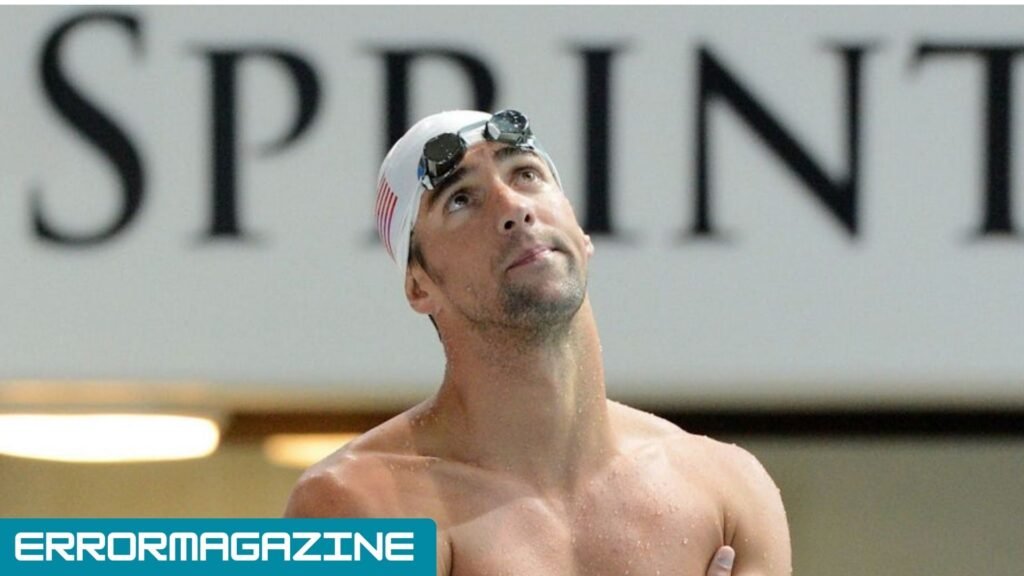
Michael Phelps After Competitive Swimming
Phelps’ public identity did not end with his final Olympic race.
He established the Michael Phelps Foundation in 2008 after his historic Beijing performance. According to the foundation, its work has focused on areas including water safety, healthy living, confidence and mental wellness.
This represents an important second chapter in his career.
Instead of relying only on his Olympic achievements, Phelps has used the recognition generated by swimming to support programs intended to help young people develop skills in and outside the water.
He has also publicly discussed mental wellness, adding another dimension to his post-competition work.
His legacy therefore includes both measurable sporting records and his efforts after elite competition.
Who Was Audrey Hepburn?
Audrey Hepburn was a British actress and humanitarian born on May 4, 1929, in Brussels, Belgium.
Her childhood was shaped partly by the upheaval of the Second World War. She later studied ballet before developing an acting career.
Her breakthrough came with Roman Holiday, released in 1953 and co-starring Gregory Peck.
The performance transformed Hepburn into an international film star.
At the 26th Academy Awards in 1954, she won the Academy Award for Best Actress for her performance in Roman Holiday. Academy records confirm the victory.
Her success was not limited to cinema. In 1954, she also won a Tony Award for her performance in the Broadway play Ondine.
Our Latest post : DD Osama Age: Real Name, Career, Music and Biography
Audrey Hepburn’s Most Recognized Screen Work
Hepburn’s career eventually included films that became closely associated with twentieth-century Hollywood.
Among her best-known works are Roman Holiday, Sabrina, Funny Face, Breakfast at Tiffany’s, Charade and My Fair Lady.
Her public image became strongly associated with elegance and fashion, but reducing Hepburn to style overlooks her acting accomplishments.
Her Oscar-winning performance in Roman Holiday demonstrated her ability to carry a major production early in her Hollywood career Her stage success further showed that her career extended beyond film.
Hepburn gradually reduced her acting commitments, particularly as her priorities shifted toward family life and, later, humanitarian work.
Audrey Hepburn’s Humanitarian Legacy
Hepburn’s work with UNICEF became one of the most important parts of her later life.
UNICEF appointed her a Goodwill Ambassador in 1988.
Her involvement was not simply ceremonial. UNICEF records document field visits connected with children’s welfare and development programs in countries across Africa, Asia and Latin America.
She visited Ethiopia soon after becoming an ambassador and subsequently participated in missions involving issues such as vaccination, nutrition, clean water, education and support for disadvantaged children.
UNICEF also records her participation in speeches, media interviews and international advocacy.
Her connection to humanitarian relief had personal historical meaning. Hepburn had experienced wartime hardship as a child in Europe and later spoke about having received relief assistance.
In 1992, she received the Presidential Medal of Freedom.
Hepburn died at her home in Switzerland on January 20, 1993.
Her humanitarian work remains an important part of her legacy alongside her films.

Human Research: Is There a Real Michael Phelps and Audrey Hepburn Connection?
A careful comparison of institutional biographical records produces a straightforward answer: no significant relationship between Michael Phelps and Audrey Hepburn is documented by the reliable sources reviewed for this article.
There is no verified evidence establishing that they were relatives, friends, professional collaborators or acquaintances.
Their timelines do overlap.
Phelps was born on June 30, 1985. Hepburn died on January 20, 1993. Therefore, Phelps was a young child during the final years of Hepburn’s life.
That makes a meeting chronologically possible, but possibility should not be presented as historical fact.
No reliable record reviewed for this article establishes a meaningful meeting between them.
This distinction is particularly important with unusual two-name search queries. Search engines can place unrelated names beside one another for many reasons. The existence of a search phrase does not prove a real-world relationship.
What They Actually Have in Common
A more defensible comparison concerns their public legacies.
Phelps achieved extraordinary recognition through sport. Hepburn achieved international fame through acting.
Both later used their visibility for causes beyond their original careers.
Phelps created a foundation whose work includes water safety, healthy living and mental wellness. Hepburn spent the final phase of her public life advocating for children through UNICEF.
Their charitable activities were separate, and there is no reason to present them as collaborators.
What connects their stories conceptually is the transition from professional achievement to broader public service.
A Timeline Showing Their Different Eras
1929: Audrey Hepburn is born in Brussels, Belgium.
1953: Roman Holiday establishes Hepburn as a major international film actress.
1954: Hepburn wins the Academy Award for Best Actress for Roman Holiday and a Tony Award for Ondine.
1985: Michael Phelps is born in Maryland, United States.
1988: Hepburn becomes a UNICEF Goodwill Ambassador.
1992: Hepburn receives the Presidential Medal of Freedom.
1993: Audrey Hepburn dies in Switzerland.
2000: Phelps competes at his first Olympic Games in Sydney at age 15.
2004: Phelps wins eight Olympic medals in Athens, including six gold.
2008: Phelps wins eight gold medals at the Beijing Olympics and establishes the Michael Phelps Foundation.
2016: Phelps finishes his Olympic career at the Rio Games.
This timeline makes the lack of a professional connection especially clear. Hepburn died seven years before Phelps made his Olympic debut.
Why Their Legacies Remain Significant
Michael Phelps and Audrey Hepburn became influential through entirely different forms of performance.
For Phelps, success could be measured precisely through times, races and medals. His 28 Olympic medals provide a statistical record of sustained elite performance across multiple Games.
Hepburn’s influence is harder to express through numbers alone. Her legacy combines acclaimed performances, enduring films and humanitarian advocacy.
Their stories therefore illustrate two paths toward long-term cultural recognition.
One emerged from competitive sport and record-breaking results. The other developed through cinema, theatre and humanitarian service.
Neither requires an invented relationship to make the comparison interesting.
Frequently Asked Questions
Were Michael Phelps and Audrey Hepburn related?
No reliable biographical evidence establishes a family relationship between Michael Phelps and Audrey Hepburn. Their documented backgrounds and careers are separate.
Did Michael Phelps ever meet Audrey Hepburn?
No significant meeting between them was identified in the reliable records reviewed for this article. Their lives overlapped from Phelps’ birth in 1985 until Hepburn’s death in 1993, but chronological overlap alone does not establish that they met.
How many Olympic medals did Michael Phelps win?
Michael Phelps won 28 Olympic medals: 23 gold, three silver and two bronze. His 23 Olympic gold medals are part of what made his competitive career historically exceptional.
What was Audrey Hepburn’s biggest acting achievement?
One of her most important achievements was winning the Academy Award for Best Actress for Roman Holiday. She also won the 1954 Tony Award for Actress in a Play for Ondine.
What humanitarian work did Audrey Hepburn do?
Audrey Hepburn became a UNICEF Goodwill Ambassador in 1988. She participated in international field missions and advocacy concerning children’s health, nutrition, education, clean water and humanitarian needs during the final years of her life.
Conclusion
Michael Phelps and Audrey Hepburn were major public figures from different generations and different professions, but there is no reliable evidence of a meaningful personal, family or professional connection between them.
Phelps became an Olympic legend through a record 28 medals and later expanded his work into water safety, healthy living and mental wellness. Hepburn became an Oscar-winning film star before dedicating much of her later public life to humanitarian advocacy for children.
Their names can reasonably be compared as examples of fame developing into broader influence. What the historical record does not support is turning that comparison into a relationship that has never been established.
More On ErrorMagazine