


A festival can look ready while its exits tell another story. One parked flight case can block an entire exit corridor. A red pull station can vanish behind a merch rack. That’s why organizers lean on trained people, not just sprinklers. Good special event fire watch pairs patrols with written proof. Local fire inspectors check those records in person. NFPA 101, the national Life Safety Code, expects it. Pyrotechnics, hot work, and big crowds raise the stakes further. Duties, inspections, logs, and timing all shape readiness.
Fire Watch Staff Do One Job Only
A patrol guard can’t double as an usher. That rule sounds strict, but it makes sense. Someone checking tickets isn’t scanning for blocked doors or smoke. Stagehands rigging lights miss the same warning signs. OSHA requires someone whose sole job is spotting fire hazards. Divided attention is how small problems grow.
What Do Guards Check on Each Round?
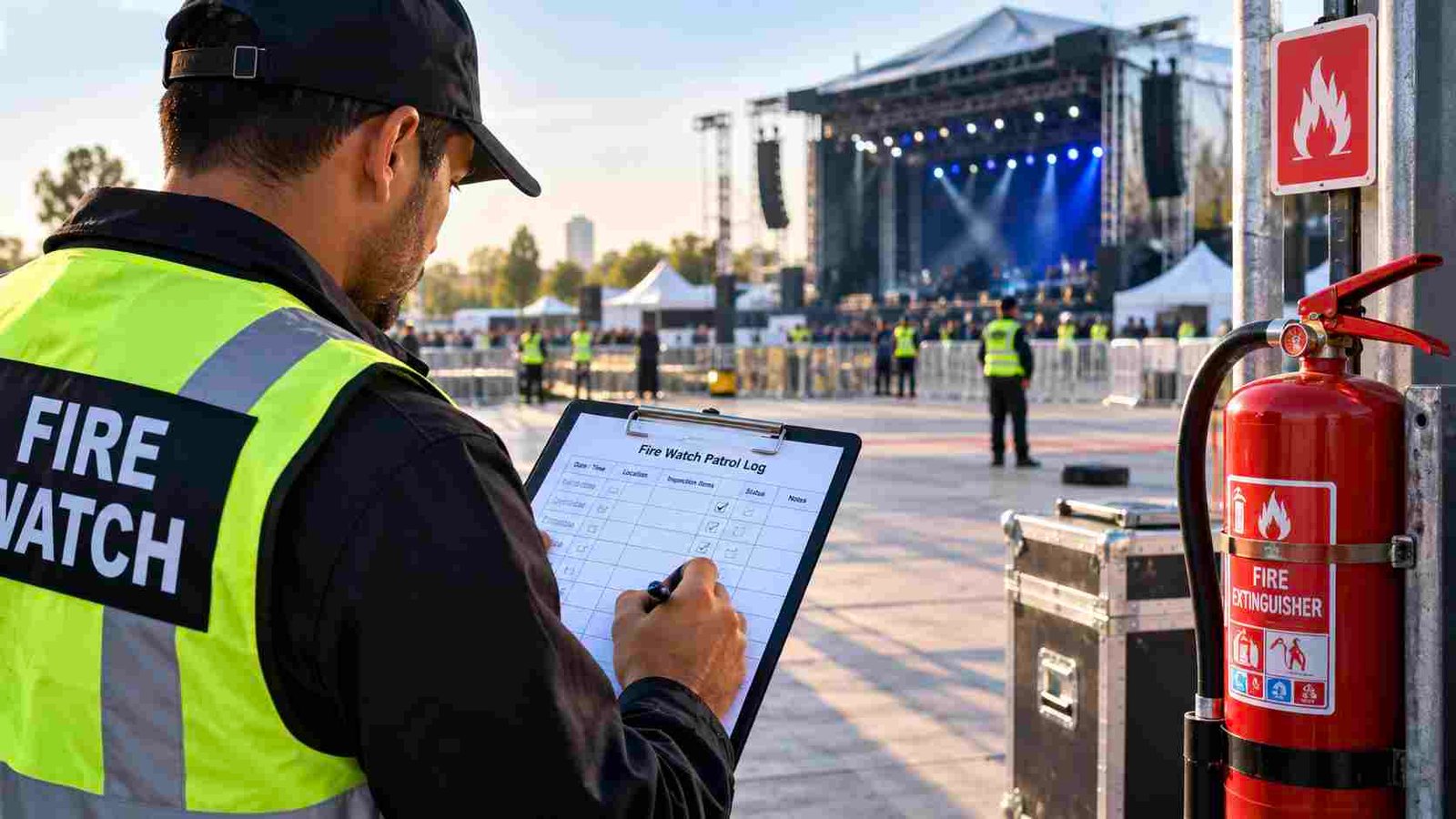
Each loop starts with exits. Guards check that panic bars, the push handles, open freely. Wedged-open doors get closed on the spot. Extinguishers need their pins in and gauges reading green. Sprinkler control valves and hydrants must stay reachable, too.
Spotting smoke means pulling the alarm and radioing for help first. Grabbing an extinguisher comes second, and only if it’s safe.
Pre-Show Sweeps Catch Problems Before Doors Open
Before guests arrive, a full sweep tackles the basics:
- Crews clear stairwells of flight cases and spare chairs.
- Exit signs and backup lights get tested on battery power.
- Electrical panels keep at least 36 inches of open space.
- Rubber cable ramps cover power runs crossing walkways.
- Backdrops keep 18 inches of space under sprinkler heads.
How Often Should Patrols Circle the Venue?
Local fire officials, called the AHJ, set the pace. Riskier areas get shorter loops, sometimes every 15 minutes. A concert with pyrotechnics sits at that tighter end. Smart special event fire watch plans stagger guards across the site. No stretch goes unwatched during a crowd surge.
Food trucks need their propane cylinders strapped upright. Backstage passages deserve the same attention as the front rows.
Why Does Real-Time Logging Matter So Much?
A log written at shift’s end proves nothing. Backfilled entries, filled in later from memory, won’t hold up. Apps like Silvertrac stamp each check automatically. Every entry should note:
- Each check lists time and zone.
- Guards print and sign names.
- Notes describe hazards found.
- Logs record each fix made.
Teardown Is Where Fires Sneak In
Crowds leave, but the risk doesn’t. Teardown brings grinders, cutting torches, and spent pyrotechnic casings. Hot work just means jobs that throw sparks or flame. NFPA 51B requires 60 minutes of watching after it. Embers in a stage deck can smolder that long unseen. So the last log entry often lands hours after the encore. A clean final entry protects the venue’s next booking.
FAQs
Can security guards handle fire watch at events?
They can, if fire watch is their only assignment. Crowd control pulls their focus, so separate staff handle it, and many venues post one guard per zone.
How long should event fire watch logs be kept?
Logs stay on-site for the whole event. Three years of archiving covers most insurance and legal reviews, and digital platforms make retrieval faster during audits.
Does NFPA 241 apply to events?
It applies when stage builds or temporary structures go up. That’s often when sprinklers get modified or switched off, and local fire officials decide how it’s enforced.
What if a hazard can’t be fixed on the spot?
A broken exit latch gets escalated to the safety director. The AHJ liaison hears about it immediately, and patrols keep logging until the repair is confirmed.