


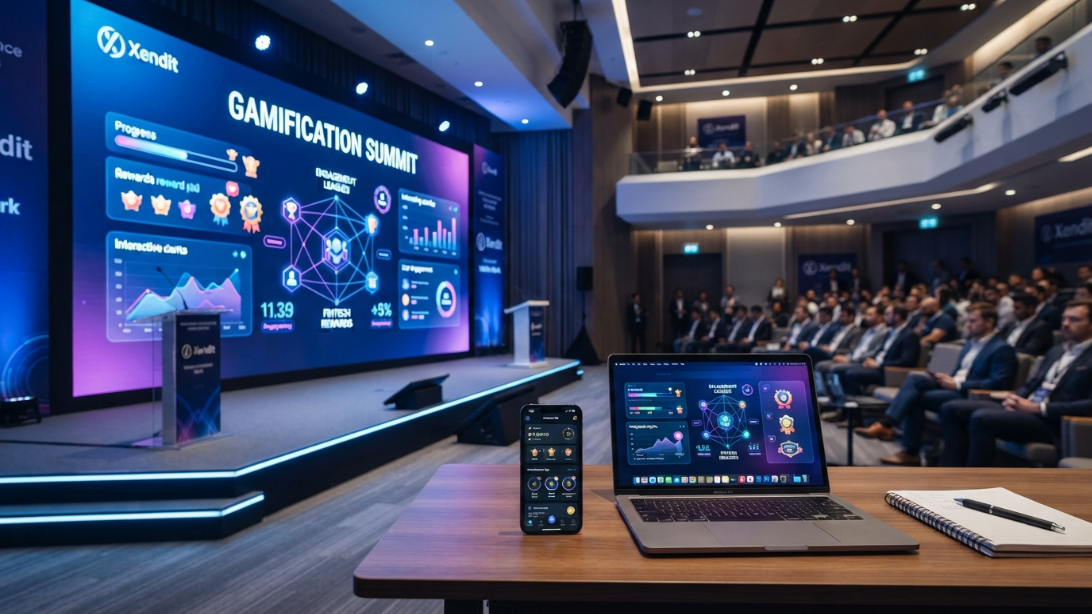

The Xendit Gamification Summit is a topic that connects gamification with digital business, customer engagement, and technology. Xendit is known as a financial technology company in Southeast Asia, while gamification refers to using game-like ideas in non-game experiences. These ideas can include points, rewards, progress systems, challenges, and other interactive elements.
When people search for xendit gamificationsummit work, they may be trying to understand what the summit is about and how gamification can work in real business situations. The subject is especially interesting because modern digital products compete for attention. Businesses need more than simple functionality. They also need experiences that encourage people to return and stay engaged.
| Quick Information | Details |
|---|---|
| Topic | Xendit Gamification Summit |
| Main concept | Gamification and digital engagement |
| Business focus | Customer interaction and user experience |
| Related term | xendit gamificationsummit work |
| Key idea | Using game mechanics outside traditional games |
The idea behind gamification is not simply to turn a business application into a game. Instead, it is about understanding what motivates people and using those motivations in a useful way. A payment platform, shopping service, learning app, or financial product could use progress indicators, rewards, challenges, or personalized experiences to make routine actions more engaging.
What Does Xendit Gamification Summit Work Mean?
The phrase Xendit Gamification Summit Work can be understood as a search for information about how gamification concepts are discussed or applied in connection with Xendit and digital business. It combines three ideas: Xendit, the Gamification Summit, and practical business applications.
Gamification has become increasingly important because customer expectations have changed. People are used to interactive applications that provide instant feedback. A digital product that feels slow, confusing, or disconnected can quickly lose a user’s attention. Gamification can help create a clearer journey when it is designed around a genuine user need.
Why Is Gamification Important?
Gamification works by borrowing selected elements from games. It does not require a company to create a complete game. Instead, small interactive features can influence how users experience a product.
Common examples include:
- Reward points
- Progress bars
- Achievement levels
- Challenges
- Badges
- Streaks
- Personalized goals
- Instant feedback
The strongest implementations usually have a clear purpose. A reward should encourage a useful action rather than simply distract the customer.
How Does Gamification Work in Business?
Gamification starts with a basic question: What action do we want users to take? A business might want customers to complete onboarding, make regular purchases, learn about a product, or return to an application.
Once the goal is clear, designers can introduce suitable game mechanics. For example, a progress bar can show customers how close they are to completing a process. A reward system can encourage repeat activity. Immediate feedback can make an otherwise boring task feel more responsive.
| Gamification Element | Possible Business Purpose |
|---|---|
| Points | Encourage repeated actions |
| Badges | Recognize achievements |
| Levels | Show user progress |
| Challenges | Encourage specific activities |
| Rewards | Provide an incentive |
| Progress bars | Make completion visible |
The important point is balance. Too many game elements can make an application feel childish or complicated. Good gamification is usually subtle. Users should understand the value without feeling that the business is manipulating them.
Key Ideas Discussed at a Gamification Summit
A gamification-focused summit can bring together ideas from technology, marketing, product design, psychology, and business strategy. These areas overlap because user behavior is influenced by both the product and the experience surrounding it.
One important concept is user motivation. People do not all respond to the same reward. Some users enjoy competition, while others prefer personal progress. Some care about discounts, while others appreciate recognition or convenience. Understanding these differences is essential when designing an effective experience.
Customer Engagement
Customer engagement is one of the biggest reasons businesses explore gamification. A well-designed system can give users a reason to interact with a product more often.
However, engagement should not be measured only by the number of clicks. A better question is whether users are completing meaningful actions and receiving genuine value.
Personalization
Personalization can make gamification more relevant. Instead of giving every customer the same challenge, a system can use user behavior to provide more appropriate goals or rewards.
For example, a new customer might receive guidance for completing basic steps. A regular customer might see a different set of goals based on their previous activity.
Digital Experience
Gamification can also improve the overall digital experience. A complicated process can become easier to understand when users can clearly see their progress.
This is especially useful for processes that involve multiple steps. Instead of wondering how much remains, users can see where they are and what comes next.
Why Gamification Matters for Businesses
Businesses operate in a competitive digital environment. Customers have many choices, and changing from one service to another can sometimes take only a few seconds.
Gamification can help businesses create a more memorable experience. When customers understand their progress and receive useful feedback, they may feel more involved with the product.
Benefits of Gamification
A thoughtful gamification strategy can potentially help businesses:
- Improve user engagement
- Encourage repeat actions
- Make complex processes easier
- Increase customer participation
- Provide clearer feedback
- Build stronger product experiences
Still, gamification is not a guaranteed solution. A weak product cannot be fixed simply by adding points or badges. If the underlying service does not solve a real problem, game mechanics will rarely create lasting loyalty.
A Simple Example of Gamification at Work
Imagine a digital financial application wants new customers to complete their profiles. Instead of showing a plain checklist, the application could display a progress indicator.
The customer might see that their profile is 60% complete. After adding another important detail, the progress could increase. The system might then explain what remains and why completing the information is useful.
This is a simple example of gamification because the user receives visible progress and feedback. There does not need to be a complicated game.
Key lesson: Good gamification makes useful actions feel clearer and more rewarding.
Case Study Example
Consider a fictional online payment service called PayFlow. The company notices that many new customers start registration but do not finish it.
The product team adds a simple progress system. Users can see each completed step and receive helpful guidance for the next one. After testing the change, the company compares completion rates with the previous version.
The important part of this example is not the points or badges. The real improvement comes from making the user’s journey easier to understand.
Frequently Asked Questions
What is the Xendit Gamification Summit?
The Xendit Gamification Summit relates to the use of gamification ideas in digital business and customer experiences. Gamification applies selected game mechanics to non-game products and services.
What does xendit gamificationsummit work mean?
Xendit gamificationsummit work is a search phrase related to understanding the summit, its concepts, and how gamification can be applied in practical business environments.
What is gamification in business?
Gamification means using selected game-like elements in a non-game environment. Businesses may use progress, rewards, challenges, points, or feedback to encourage useful customer actions.
Can gamification improve customer engagement?
Yes, well-designed gamification can improve engagement by making progress visible and providing useful motivation. However, results depend on the product, audience, and quality of implementation.
Is gamification useful for fintech companies?
Gamification can be useful for fintech products when it improves understanding, participation, or user progress. It should support the financial service rather than distract users from important decisions.
Final Thoughts
The interest surrounding xendit gamificationsummit work reflects a broader change in how businesses think about digital experiences. Customers increasingly expect products to be simple, interactive, responsive, and easy to understand.
Gamification can support these goals when it is used thoughtfully. Points, challenges, rewards, and progress systems are only tools. The real value comes from understanding users and designing experiences that help them complete meaningful tasks.
For companies exploring gamification, the best starting point is not asking, “How can we add game features?” It is asking, “How can we make this experience more useful and engaging for our customers?” That shift in thinking is what can turn gamification from a simple trend into a practical business strategy.
next : Lisa Wiehoff: Who Is She and What Do We Know About Her?